
- Home
- Service Records
- WRNS WW2 service records
WRNS WW2 service records: how to get a Wren's file
Wren records have not moved to Kew yet. Apply to the MOD, at no fee, and use the Gazette and CWGC while the search runs.
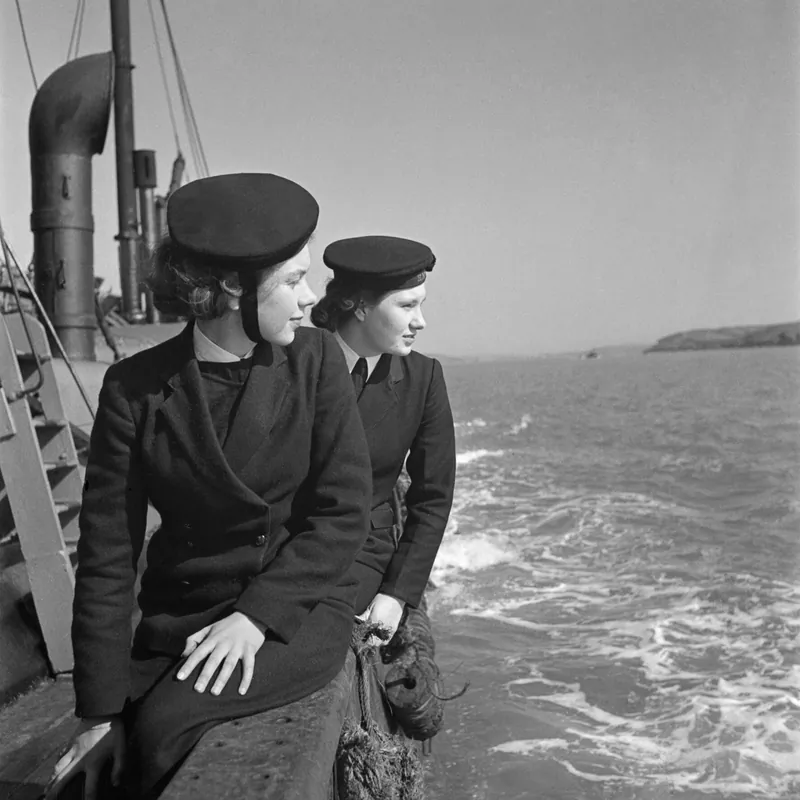

WRNS WW2 service records are still held by the Ministry of Defence, not The National Archives. Apply through GOV.UK. It is free. You need her full name and date of birth, and her service number if you have it. Expect a long wait: GOV.UK says the search can take up to a year.
Key facts
- Who holds them
- The Ministry of Defence, for WRNS service from 1939 onwards
- Cost
- No fee to request records from the MOD
- Waiting time
- GOV.UK says the search can take up to a year
- You need
- Full name, date of birth, service number if known
- First World War
- 1917-1919 WRNS records are already at Kew, and many are online
- Do not confuse
- A wartime Wren's file is not in the 1917-1919 online collections
Checked against GOV.UK, The National Archives and the Imperial War Museums on 10 November 2026. The National Archives' WRNS guide still mentions an administrative fee for MOD requests; the live GOV.UK application page, checked the same day, says there is no fee.
That is the same route as the Royal Navy. It is not the paid Kew route now used for the ATS and the WAAF.
What was the WRNS?
The Women’s Royal Naval Service, the Wrens, was formed in 1917 as a branch of the Royal Navy, disbanded in 1919, and reformed in 1939. The Imperial War Museums dates that second formation to April 1939. The service was disbanded fully in 1993, when women were allowed to join the Royal Navy.
The National Archives says Wrens first undertook domestic duties such as cleaning and cooking, then a wider range of roles, including wireless telegraphists and electricians, and that most were based in the United Kingdom. The Imperial War Museums adds that women were recruited for shore-based jobs to release men for service at sea, that by 1943 there were 74,000 WRNS serving in the UK and overseas, and that from 1941 Wrens served at Bletchley Park and its outstations, operating machines used in code-breaking.
Women were conscripted from December 1941. They could choose industry or one of the auxiliary services: the ATS, the WAAF or the WRNS.
Where are WRNS WW2 service records now?
With the MOD. The National Archives’ WRNS personnel guide is blunt: while some related documents are at Kew, the majority of the records are held by the Ministry of Defence. For service from 1939 to the present, it sends you to GOV.UK to request a summary of the service record, available to next of kin and to the general public, provided she is no longer living.
The First World War service is a different matter, and it is already online. That is the trap.
- 1917 to 1919 officers: ADM 318, searchable online (charges apply). Appointment registers in ADM 321 are free to browse. Service record cards in ADM 340 also include First World War details where an officer later served in the Second World War.
- 1917 to 1919 ratings: ADM 336, searchable online (charges apply).
- 1939 onwards: apply to the MOD. These wartime files are not in those online collections.
The National Archives says Royal Navy records are not being transferred until 2027. It does not separately confirm the same date for the WRNS. Until the files are at Kew, apply to the MOD.
How do you apply for a WRNS WW2 record?
Online or by post, through GOV.UK. The process is the one used for Royal Navy records.
- Gather the details. Full name, date of birth, and service number if known.
- Find proof of death if you can. Not compulsory, but see below.
- Apply online, or download the request form and the Navy search form and post them.
- Wait for confirmation. The service acknowledges your application. Records come by post or email.
GOV.UK asks applicants not to submit more than 5 applications a month, because of demand.
Is there a fee?
GOV.UK, the page you apply on, says there is no fee to request records from the MOD. The National Archives’ WRNS research guide still says “an administrative fee applies.” We have followed the live GOV.UK wording, checked on 10 November 2026. If a fee is requested when you apply, use the figure you are given then.
The National Archives already charges for the Army and RAF records it holds, so fees may apply once WRNS files reach Kew.
Do you need a death certificate?
Not strictly. GOV.UK says you do not have to provide one. But without it, information may be withheld unless the person:
- died in service, or
- was born more than 116 years ago.
Online applications need the certificate as a PDF, PNG or JPEG. No certificate? Order a copy, or make a declaration of presumed death.
What will the record show?
GOV.UK says a record may include:
- rank
- dates she joined and left
- place and date of birth
- date of death, if she died in service
- good conduct medals
- career details, such as the units she served in
Medical and disciplinary details may be withheld. In some cases little or nothing survives. Be ready for that.
No service number? Try these first
A number speeds everything up. Look for it on:
- Discharge or release papers kept at home.
- Her CWGC record, if she died in service. Search CWGC free.
- Family photographs and letters, which sometimes carry a number, a rank or a shore establishment.
Our guide to finding a WW2 service number covers every source.
What you can search while you wait
Unlike Royal Marines unit diaries, or RAF Operations Record Books, there is no single, well signposted WRNS war diary series in The National Archives’ personnel guide. Do not invent one. Use the sources that are actually there.
- The London Gazette, free to search, for commissions, promotions and awards. See our gallantry awards guide.
- CWGC, if she died in service. See how to find a WW2 grave or memorial.
- Discovery. Once you have a shore establishment, training depot or unit name, search the catalogue by that name and a date range. Some naval operational records are in ADM 199. Ships’ logs in ADM 53 are mainly navigational, and help only if you already know a ship.
- Registers of deaths on ships (ADM 104), free downloads, if she died on board. Most Wrens served ashore, so this will not apply in every case.
Campaign stars were issued unnamed. The record and the ribbons are your evidence: see how to identify WW2 medals. Medals never issued can still be claimed by next of kin. See how to claim WW2 medals.
Next steps
Apply to the MOD today. Keep any papers that name a port, a depot or a unit, so you can search Discovery while the file is found.
For the naval process this follows, use our Royal Navy WW2 service records guide. If she served in the ATS or the WAAF, those files are now requested from Kew: ATS service records and WAAF service records. For searches that cost nothing tonight, start with free WW2 records online.
FAQ: WRNS WW2 service records
Where are WRNS WW2 service records held?
With the Ministry of Defence. The National Archives' WRNS personnel guide sends all requests for service from 1939 onwards to the MOD, provided the person is no longer living.
How much does a WRNS service record cost?
Nothing from the MOD. GOV.UK, the page you actually apply on, says there is no fee to request records from the MOD. The National Archives' WRNS research guide still says an administrative fee applies. We have followed the live GOV.UK wording, checked on 10 November 2026.
Do I need a death certificate?
Not strictly. GOV.UK says you do not have to provide one, but without it information may be withheld unless the person died in service or was born more than 116 years ago.
Are WRNS WW2 records online?
The wartime service records are not. Online WRNS collections at The National Archives cover 1917 to 1919, in ADM 318 for officers and ADM 336 for ratings. Those are the First World War service, which was disbanded in 1919.
Did most Wrens serve at sea?
The National Archives says most Wrens were based in the United Kingdom, in shore roles. The service was created to release men for service at sea. Some wartime work did take Wrens out to ships, for example as boarding officers and visual signallers with the Naval Control Service.
When do WRNS records move to The National Archives?
The National Archives says Royal Navy records are not being transferred until 2027. It does not separately confirm the same date for the WRNS. Until the files are at Kew, apply to the MOD.
Sources
Checked 10 November 2026.
- GOV.UK: Apply for the records of a deceased serviceperson
- GOV.UK: Get a copy of military records of service
- The National Archives: Women's Royal Naval Service personnel
- The National Archives: MOD service personnel records fees, FAQs
- The National Archives: Royal Navy operations in the Second World War
- The National Archives: Deaths in the First and Second World Wars
- Imperial War Museums: The vital role of women in the Second World War
- CWGC: Find war dead