
- Home
- Service Records
- WAAF WW2 service records
WAAF WW2 service records: how to find a Women's Auxiliary Air Force file
The file is on its way to Kew, but you cannot search it by name yet. Request it, then read the station's Operations Record Book.
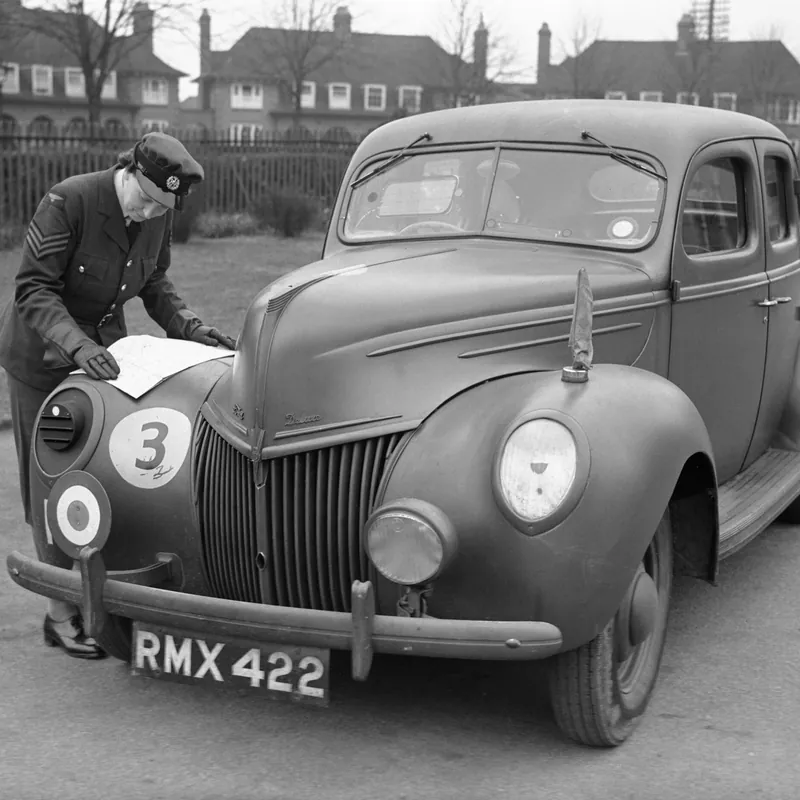

WAAF WW2 service records are being transferred from the Ministry of Defence to The National Archives, but they are not in the catalogue yet. Do not wait for a name search to work. Use the Request a military service record service for a woman born before 1940. The Standard copy costs £42.25 as a colour PDF. Then read her station’s Operations Record Book, which may already be online.
Key facts
- Who holds them
- The National Archives, as records transfer from the MOD
- On the catalogue yet?
- Not yet. The National Archives says WAAF records cannot currently be searched there
- How to get one
- Request a military service record for a woman born before 1940
- Standard copy
- £42.25 as a PDF, £47.16 on paper
- Full record check
- £48.87, plus £1.04 per page released
- Unit records
- Operations Record Books, including WAAF sections, in AIR 24 to AIR 29
Fees in force since 2 February 2026. Checked against The National Archives, GOV.UK, the Imperial War Museums and the RAF Museum on 10 November 2026.
Two jobs, in that order. The service record should tell you where she served. The ORB tells you what the station was doing.
What was the WAAF?
The Women’s Auxiliary Air Force was established on 28 June 1939 and mobilised on 28 August 1939. The RAF Museum says it was not an independent organisation, and not fully integrated with the RAF. It existed to substitute women for RAF personnel where that was possible. In 1941 it became part of the Armed Forces of the Crown and subject to the Air Force Act.
The Imperial War Museums and the RAF Museum agree on the wartime peak: 182,000 members by 1943, and the RAF Museum dates that peak to July 1943. The RAF Museum also says that by 1945 a quarter of a million women had served, in over 110 trades, supporting operations around the world.
The names changed around it, and that confuses searches:
- 1918 to 1920: the first Women’s Royal Air Force. Those airwomen’s records are in AIR 80. Do not start there for a Second World War file.
- 1939 to 1949: the WAAF.
- From 1 February 1949: the Women’s Royal Air Force was re-formed. It merged with the RAF in 1994.
The National Archives still files its research guide under “Women’s Royal Air Force personnel”, and discusses the wartime airwomen in that same guide. Use both names when you search.
Women were conscripted from December 1941. They could choose industry or one of the auxiliary services: the ATS, the WAAF or the WRNS.
The RAF Museum is specific about flying. Except for nursing orderlies, aircrew duty was never approved. Women who flew aircraft in Britain did so as civilian pilots of the Air Transport Auxiliary, a separate service. Do not treat an ATA pilot as a WAAF file. The RAF Museum holds ATA service records; check with the museum for current access rules.
Overseas service was available to officers from 1940, and to airwomen from 1943.
Where are WAAF service records now?
On their way to Kew, or already there and not yet catalogued. The National Archives’ Women’s Royal Air Force personnel guide says records of airwomen who served after 1939 are being transferred from the MOD, and that those service records “are not currently available to search on the catalogue.”
That is different from RAF airmen, whose transferred files are being added to AIR 85, and officers to AIR 84. The National Archives has not said that WAAF files are in those series. Search Discovery anyway, in case a catalogue entry has appeared since the guide was written. Then request the record.
The exceptions:
- Born on or after 1 January 1940. Apply to the MOD through GOV.UK. There is no fee. The search can take up to a year.
- Service from 1963 onwards. Still with the MOD. The National Archives says those later summaries are not available to the general public, but next of kin may request access.
- Officers. The published TNA guide discusses airwomen’s records. We could not find a separate, searchable WAAF officers’ series in the catalogue as of November 2026. Use the same request service, and say if she was commissioned.
How do you request a WAAF record?
Use The National Archives’ request service for a deceased person born before 1940. You will need her full name and date of birth. A service number helps. Our guide to finding a WW2 service number lists the places to look.
The National Archives may ask for proof of death if she was born less than 115 years ago. It accepts an official death certificate, a CWGC certificate, a published obituary, or a grant of probate with evidence of the date of birth.
What does it cost?
The fees are set by the Public Record Office (Fees) Regulations 2025, in force since 2 February 2026. The National Archives says the Combined (Standard) service is available for Royal Air Force records.
| Standard | Full record check | |
|---|---|---|
| What you get | Key documents from the file, such as enlistment details, a record of service and testimonials. | Everything that can be released after a sensitivity check. Closed material is withheld or redacted. |
| Price | £42.25 digital, £47.16 paper | £48.87 up front, then £1.04 per digital page (£1.52 for some record types) |
| Speed | Within 30 working days | Not stated |
Start with Standard. You pay per record, and no VAT is charged. Standard requests made since 2 February 2026 are answered within 30 working days.
The National Archives has not published a WAAF-specific list of the forms you will receive. For RAF airmen it usually describes a single Form 543, and it says the RAF destroyed most medical records of non-commissioned ranks in the 1960s. It does not say whether that destruction also applied to WAAF files. Expect postings, units, promotions and dates. Do not count on a medical history.
How to find what her station or unit did
You need the unit or station from the service record, or from letters and photographs kept at home. Then read the Operations Record Books.
The National Archives calls ORBs likely to be the most revealing documents available for squadrons, and the same daily books were kept by other RAF units, including WAAF sections. They come in two main parts: Form 540, a summary of events, and Form 541, detail of work carried out. They can include nominal rolls, lists of officers, and promotions, transfers or awards.
| ORBs of | Series |
|---|---|
| Commands | AIR 24 |
| Groups | AIR 25 |
| Wings | AIR 26 |
| Squadrons | AIR 27 |
| Stations | AIR 28 |
| Miscellaneous units | AIR 29 |
Search by unit or station name, and by squadron number without ordinals. For the Second World War, The National Archives says squadron ORBs and combat reports can be searched and downloaded from its website.
A published example is AIR 29/687/4: the ORB of 84 Operational Training Unit at Desborough, with a dedicated WAAF section. It records work and leisure, including the WAAF’s fifth anniversary parade in July 1944. The book also notes that by the end of October 1943 over 200 airwomen were working at that station.
Combat reports in AIR 50 and missing-aircrew files in AIR 81 are the next step for aircrew, not for most WAAF trades. If she died in service, start with the CWGC. For awards, search the London Gazette. See our guides to WW2 gallantry awards and how to identify WW2 medals.
Next steps
Request the record today. While you wait, gather any station, trade or service number from papers at home, and search the ORBs.
For RAF airmen and officers, use our RAF WW2 service records guide. If she served in the ATS or the WRNS, those records follow different routes: ATS service records and WRNS service records. For searches that cost nothing, start with free WW2 records online.
FAQ: WAAF WW2 service records
Where are WAAF WW2 service records kept?
They are being transferred from the MOD to The National Archives. The National Archives' Women's Royal Air Force personnel guide says records of airwomen who served after 1939 are not currently available to search in the catalogue. Request a military service record instead.
Are WAAF records in AIR 85, like RAF airmen?
The National Archives has not said that. AIR 85 is the series it gives for RAF airmen. For airwomen, its published guide says the records are not yet searchable and points you to the request service. Search Discovery anyway, then request the file if you do not find her.
How much does a WAAF service record cost?
The Standard copy costs £42.25 as a digital PDF if The National Archives holds the record. The National Archives says the Standard service is available for Royal Air Force records. Records for women born on or after 1 January 1940 remain with the MOD, which charges no fee.
Did WAAF airwomen fly in combat?
No. The RAF Museum says that except for nursing orderlies, aircrew duty was never approved. Women who flew aircraft in Britain during the war did so as civilian pilots of the Air Transport Auxiliary, which is a separate service.
Are WAAF Operations Record Books online?
Many Second World War ORBs can be searched and downloaded from The National Archives. WAAF activity was recorded in the ORBs of RAF stations and units, not in a separate WAAF series. The National Archives has published an example from 84 Operational Training Unit, Desborough, in AIR 29/687/4.
Is a WAAF record the same as a WRAF record?
The names changed. The Women's Royal Air Force of 1918 to 1920 is a different service, with records in AIR 80. The WAAF was formed in 1939, reverted to the name WRAF in 1949, and merged with the RAF in 1994. Use the 1939 to 1949 name when you are searching for a wartime file, and do not start in AIR 80.
Sources
Checked 10 November 2026.
- The National Archives: Women's Royal Air Force personnel
- The National Archives: Royal Air Force personnel
- The National Archives: Request a military service record
- The National Archives: Our fees
- The National Archives: MOD service personnel records fees, FAQs
- The National Archives: Operations record book featuring the Women's Auxiliary Air Force
- The National Archives: Royal Air Force operations
- The Public Record Office (Fees) Regulations 2025
- GOV.UK: Apply for the records of a deceased serviceperson
- RAF Museum: Women's Auxiliary Air Force, 1939-1949
- Imperial War Museums: The vital role of women in the Second World War
- CWGC: Find war dead