
British WW2 identity discs (dog tags) explained
Two fibre discs on a length of string. One was meant to stay with him. One was meant to come home.
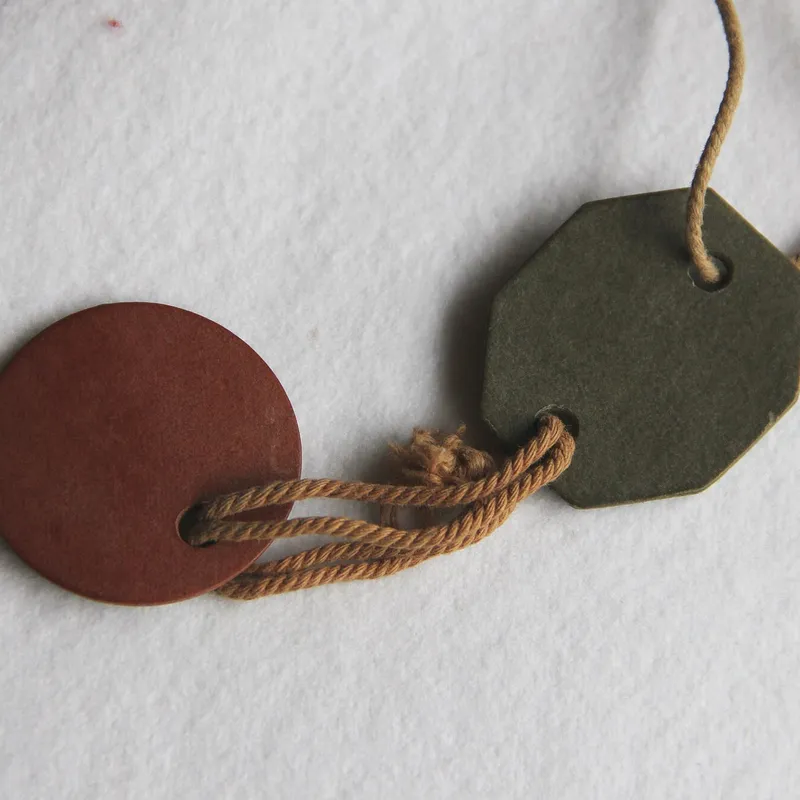

British WW2 identity discs came as a pair of compressed fibre discs on a cord: a green one, many-sided, and a red one, round. Each was stamped with the wearer’s service number, surname and initials, and religion. If he was killed, the green disc stayed with his body. The red one was taken to record the death.
Key facts
- Introduced
- British Army, 1907
- WW2 pattern
- Two compressed fibre discs: one green, many-sided; one red, round
- Green disc
- Stayed with the body
- Red disc
- Taken to record the death; sent to records and eventually next of kin
- Usually shows
- Service number, surname and initials, religion
- Most useful clue
- The service number
Based on Imperial War Museums and RAF Museum collection records, checked 2 November 2026.
Found a pair in a tin? You are holding his service number.
A short history
The British Army introduced identity tags in 1907, according to Imperial War Museums. The first official types were thin aluminium discs, punched one letter at a time on machines at regimental depots.
By 1915 the rule was two tags, both of compressed fibre, carrying identical details. IWM says fibre was more comfortable to wear in hot climates. The same red and green pairing carried on into the Second World War.
How the two discs worked
The system was simple and grim.
IWM describes the First World War arrangement. An eight-sided green tag with two holes hung round the neck. Through its second hole ran a much shorter cord, with a round red tag on it. Cut the short cord and the red tag came away. The green tag stayed.
WW2 museum labels tell the same story:
- Green disc: stayed with the body, says IWM’s label for Robert Mackay’s set.
- Red disc: sent to records and eventually to next of kin, with any personal effects.
The RAF Museum puts it in one line: the green disc remained with the body while the red disc was taken to record the death.
That is IWM’s explanation for the First World War system. Anyone finding a body with only the green tag would know the death was being reported, and could use its details to prepare a grave marker.
What is written on a WW2 identity disc?
IWM says tags were typically stamped with:
- service number
- surname and initials
- regiment, and sometimes battalion and rank (on First World War tags)
- religion
The WW2 examples in museum collections carry very little. Name, number, religion. That is often all.
| Wearer | Service | Inscription | Source |
|---|---|---|---|
| Robert James Mackay | Royal Artillery | C E 1113329 MACKAY RJ | IWM EQU 15060 |
| Harold Arthur Hill | Royal Signals | HILL H.A. 2598749 C. E. | IWM EQU 15081 |
| James Foster | Royal Armoured Corps | 7962901 CE FOSTER | IWM EQU 4227 |
| John Charles Boaler | RAF | Name, RAF service number, religion | RAF Museum X003-4312 |
Notice what is missing: no regiment on these WW2 examples. For the unit, you need other records.
Not every disc was stamped throughout. IWM records that Harold Hill’s number was stamped, but his name and “C. E.” were written in pencil.
Religion abbreviations
Religion was included so the right burial service could be given. The RAF Museum says it helped to determine any burial or cremation ceremony. IWM lists the abbreviations typically found:
| On the disc | Meaning |
|---|---|
| CE | Church of England |
| RC | Roman Catholic |
| P or PRES | Presbyterian |
| M or METH | Methodist |
| B or BAP | Baptist |
| C or CONG | Congregationalist |
| J or JEW | Jewish |
IWM’s list comes from its First World War guide. The CE seen on the WW2 discs above matches it.
Shapes and colours: do not over-read them
Museum descriptions vary. IWM calls the First World War green tag eight-sided. It describes the green discs in the Mackay and Foster sets as hexagonal. The Hill set has a red circular disc and an “octogonal brown” one. The RAF pair in our photograph has an eight-sided green disc.
So shape and exact shade are not a reliable way to date or identify a disc. The number is.
The Mackay set at IWM has two red discs and one green. Sets do not always survive as a neat pair.
Unofficial tags and bracelets
Official fibre tags were not always trusted. IWM says sailors in particular doubted they would survive water. Many men wore a personal tag as well, often a metal wrist bracelet. In the First World War, unofficial tags were made in huge numbers from reworked coins by local craftsmen, especially in the Near and Middle East.
Found a tag with only a number and no name? IWM warns it may not be military at all. It could be a works tally from a factory, used to count workers in and out.
How to trace the man from his identity disc
Start with the number. Copy it exactly.
- Confirm the number. Check it against his pay book (AB64), release papers or letters. Our guide to finding a WW2 service number lists ten places to look.
- Work out the service. Army, RAF or Navy decides where his record is. The RAF Museum example shows RAF men had discs too. A cap badge found with the discs can help.
- Order the service record. Follow our WW2 Army service records or RAF WW2 service records guide.
- If he did not come home, search CWGC by service number. See how to find a WW2 grave.
A disc that came home with the family does not by itself tell you how the man died, or whether he died in service. Many discs were simply kept by the men who wore them. Mackay, Hill and Foster all survived the war.
Looking after identity discs
Handle them as little as possible. Keep the cord with the discs, even if it is frayed: museum sets are catalogued with their twine. Store them with his papers, and write down where they were found. Our guide to preserving WW2 heirlooms covers storage conditions.
FAQ: WW2 identity discs
What do the letters C E mean on a WW2 identity disc?
Church of England. Imperial War Museums lists the religion abbreviations typically found on identity tags, including CE (Church of England), RC (Roman Catholic), P or PRES (Presbyterian), M or METH (Methodist), B or BAP (Baptist), C or CONG (Congregationalist) and J or JEW (Jewish).
Why were there two discs, one red and one green?
If the wearer was killed, the green disc stayed with the body and the red disc was taken to record the death. An IWM label says the red disc was sent to records and eventually to next of kin, with any personal effects.
Why is religion on a dog tag?
So the right burial service could be given. The RAF Museum says knowing the wearer's religion helped to determine any burial or cremation ceremony.
What were British WW2 dog tags made of?
Compressed fibre, often called fibreboard. Museum examples are strung on twine or cord. They were stamped, though one IWM example has the name and religion written in pencil.
Were the discs hexagonal or octagonal?
Museum records vary. IWM describes the First World War green tag as eight-sided, and some WW2 green discs as hexagonal. Another IWM WW2 example is described as octagonal. Go by the disc in front of you.
Did the RAF use the same identity discs as the Army?
Similar ones. The RAF Museum holds a set of red and green fibreboard discs, circa 1941, stamped with an airman's name, RAF service number and religion.
Sources
Checked 2 November 2026.
- Imperial War Museums: First World War identity tags
- Imperial War Museums: Identity Discs, British Army (Mackay, R J), EQU 15060
- Imperial War Museums: Identity Discs, British (Hill, H A), EQU 15081
- Imperial War Museums: Identity Discs, British (Foster), EQU 4227
- RAF Museum: RAF Identity Disc Set, X003-4312